


use cases
Case study
No items found.
Service

We take on DevOps and CloudOps for businesses that need their cloud infrastructure, deployments and monitoring to work as one system, with someone clearly responsible for it, instead of three separate concerns nobody fully owns.
That covers designing and migrating cloud infrastructure, replacing manual console changes with infrastructure defined as code that is reviewed and version-controlled, and automating build, test and deployment so releases are routine rather than risky. We can also take over day-to-day operations: releases, on-call, security updates and cost control.
DevOps & CloudOps
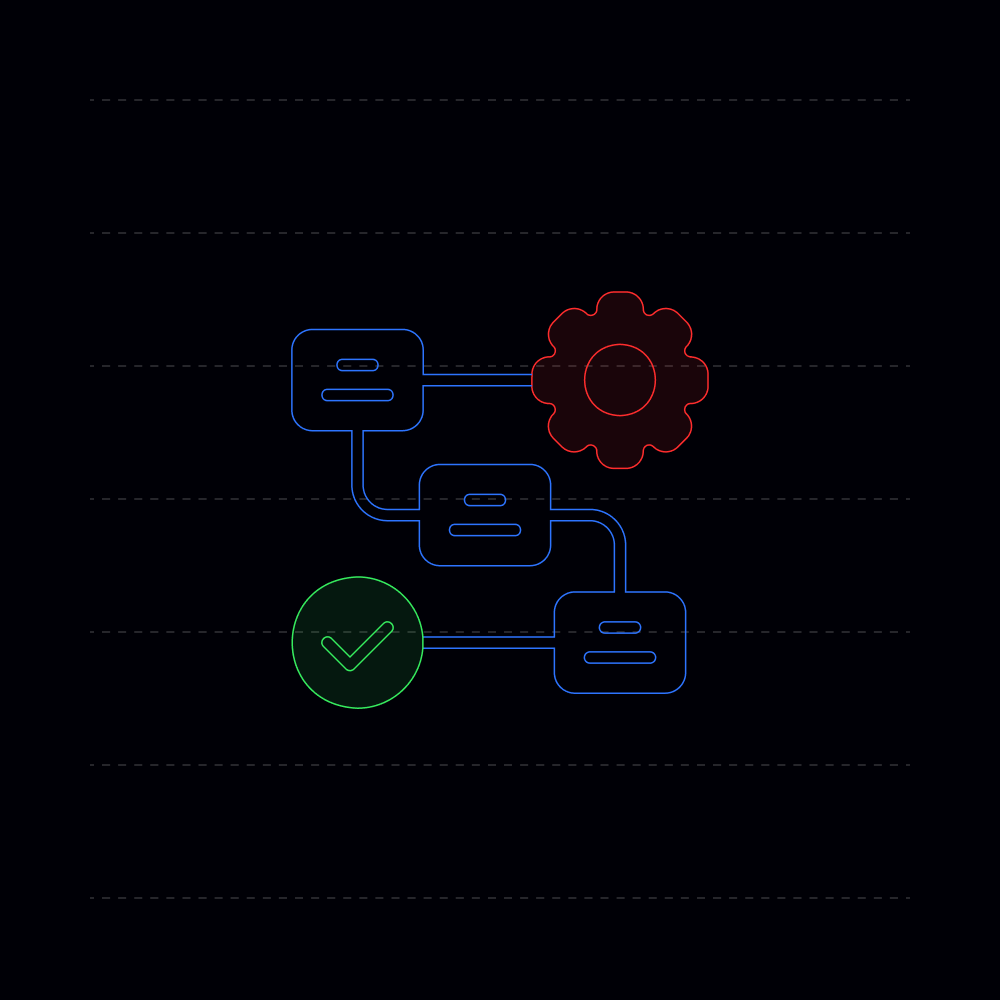

Designing and migrating cloud infrastructure, sized to actual scale rather than over-provisioned "just in case," and defined as code so environments stay reproducible instead of hand-configured. Most infrastructure problems trace back to a manual change nobody documented — the one thing that worked, until someone needed to do it again and couldn't remember how. Built so the environment can be rebuilt from code at any time, not from memory.
Automating build, test, and deployment, with security scanning built into the pipeline itself instead of a separate audit months later. A deployment that only works if a specific person is online isn't automation — it's a single point of failure with extra steps. Built so a release is a routine, low-risk event regardless of who's on call that day.
Monitoring, alerting, and incident response set up before something breaks in production, with cloud spend tracked the same way uptime is. Cost and reliability problems tend to surface the same way — after the fact, in a bill or an outage a dashboard would have caught weeks earlier. Watched continuously, so both get caught while they're still cheap to fix.
Approach
Audit, architecture, and automation, sequenced so a release never depends on who's on call that day.
Reviewing current architecture, deployment process, and where manual changes have accumulated undocumented over time — before any of it gets carried forward into something new. Why it matters: most infrastructure risk isn't in the code — it's in the one manual fix nobody wrote down.
step 01
Designing infrastructure sized to actual scale, defined as code from the start rather than configured by hand — so it can be rebuilt from that code alone if it ever has to be. Why it matters: infrastructure that's not in code isn't really documented, no matter how good the wiki page is.
step 02
Automating build, test, and deployment, with security scanning built into the pipeline itself — not a separate review someone remembers to run later. Why it matters: a deploy process that only works when a specific person runs it isn't automation yet.
step 03
Moving workloads to the new infrastructure through a staged cutover, not a single high-risk switch, with a rollback plan ready at each stage. Why it matters: the failure mode to avoid isn't a slow migration — it's a fast one that takes production down with it.
step 04
Monitoring, alerting, and cost tracking configured before anything breaks or overspends, not after — with thresholds set to catch a trend, not just a threshold already crossed. Why it matters: reliability and cost problems get expensive the same way — by staying invisible until someone's already paid for them.
step 05
Continuous tuning for cost, performance, and reliability as usage evolves, with incidents feeding back into what gets automated next, not just patched once and left. Why it matters: infrastructure that isn't actively watched drifts back toward manual fixes and undocumented workarounds within a year.
step 06
use cases

