


Technology
Technology & Platforms









Service

Most companies aren’t short on data. They’re drowning in it. Dashboards that nobody opens, reports that take days to stitch together by hand, and departments arguing over whose spreadsheet has the right revenue figures. The same mess blocks automation and AI: pilots that work on a sample and break on real data, and models built on numbers nobody trusts. Adding more tools to a broken foundation only makes the maze bigger.
Clarity starts underneath. First, we look at what you already have: which sources exist, which numbers people disagree on, and who owns each definition. Then we design a reliable data warehouse and platform, and build ETL/ELT pipelines that are monitored, tested and built to recover from failures. The result is a single source of truth that your team can trust.
On top of that foundation, your teams get BI dashboards built around the questions they ask, and advanced analytics where simple reporting is not enough. Your automation and AI projects get clean data with clear definitions and ownership, so models and workflows know what they are working with. We add automated data quality checks and monitoring from day one, so dashboards, models and automated workflows all run on data you can trust. The infrastructure is built to keep up as the business evolves.
Data & Analytics


Dashboards and reporting built around the metrics teams actually check, not just what's easy to pull from existing tables. Most dashboards get built once and then quietly ignored, because they were designed around available data instead of the actual decision someone needed to make. Built around that decision first, the data structure second.
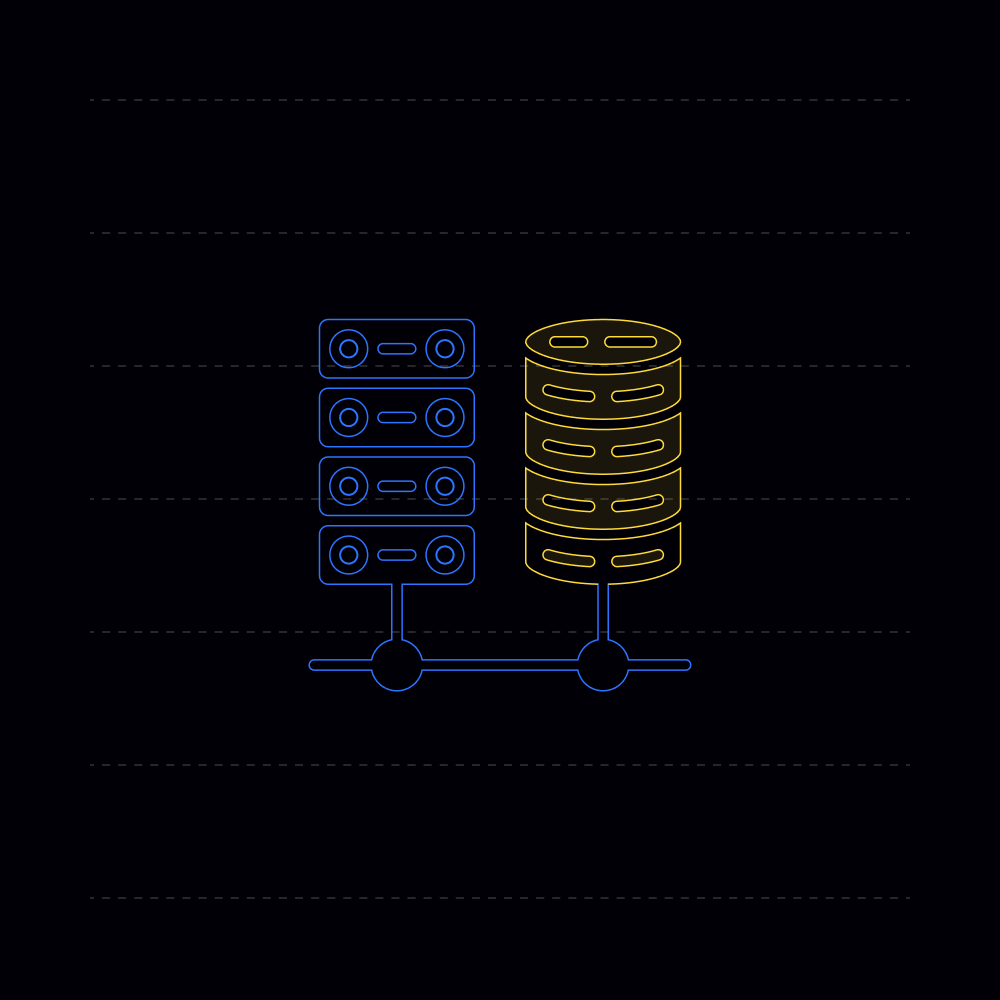
Designing the central data platform that consolidates data from across the business into one place. Most attempts to unify data don't fail from missing data — they fail because two teams already define the same metric differently, and nobody resolves that before building on top of it. Definitions get agreed on before the architecture gets built, not patched in after the first conflicting report.
Building the pipelines that move and transform data from source systems into the platform. Pipelines rarely fail loudly — they quietly drop rows or duplicate records after an upstream schema change nobody flagged, and it isn't caught until a report looks wrong weeks later. Built with validation and monitoring so a break gets caught immediately, not discovered in a stakeholder meeting.
Preparing and structuring data layers specifically optimized for machine learning, predictive models, and automation workflows. Most AI initiatives fail before they start because models are trained on unvalidated, siloed data that guarantees inaccurate results. Built on clean, monitored analytical foundations so your AI systems operate on a reliable single source of truth rather than fragmented inputs.
Approach
Discovery, architecture, and validation, sequenced so the numbers don't shift once everyone's already relying on them.
Mapping existing data sources, current reporting, and where two teams already disagree on what a metric means. Why it matters: this is where the expensive mismatches get caught on a whiteboard, not six months into a migration.
step 01
Agreeing on what each core metric actually means, then designing the warehouse structure around those definitions — not the other way around, with meaning patched in after the fact. Why it matters: architecture built before definitions are settled just encodes the disagreement into the schema.
step 02
Building the ETL/ELT jobs that move and transform data into the platform, with validation and monitoring built in from the first pipeline, not bolted on after the first bad report reaches someone. Why it matters: a pipeline that fails silently is worse than one that fails loudly — silent failures are the ones that reach a dashboard.
step 03
Moving historical data over and reconciling it against the old system's totals, row by row where it matters, before anything gets switched off for good. Why it matters: the version of this that goes wrong is quiet — a number that's just slightly off, and nobody notices until finance asks.
step 04
Building reports around the specific decisions teams need to make, not around whatever's easiest to pull from the new tables — starting from the question, not the schema. Why it matters: a dashboard nobody asked for is a dashboard nobody checks, no matter how clean the data behind it is.
step 05
Training the teams who'll actually use this, and setting a clear owner for the platform going forward — someone accountable, not a shared responsibility nobody actually holds. Why it matters: a data platform with no owner drifts back into everyone trusting their own spreadsheet within a year.
step 06
Pipeline health and dashboard usage tracked after launch, with fixes prioritized by what's actually breaking or going unused, not by whoever asks loudest. Why it matters: a data platform is a living thing — left untouched for a year, it's back to being three teams with three answers.
step 07
Technology
use cases

